Kyushu Onsen Loop: 10 Days of Steam and Volcanoes
Kyushu is the Japan of volcanoes: a loopable island where steam rises through sidewalk grates, ryokan dinner is cooked in sulfur vents, and every stop ends in a bath. This 10-day circuit out of Fukuoka gives Beppu two nights for its seven hell ponds and steam-cooked food, Yufuin a slow onsen-ryokan day beneath Mount Yufu, Nagasaki two days of history and one of the world's best night views, and Kumamoto its resurrected castle — with an optional detour toward the Aso caldera. Practical Notes verify the 2026 prices and run the rail math: the Northern Kyushu 5-day pass at ¥17,000 against roughly ¥35,000 of point-to-point tickets, the single biggest saving on any pass in this series, and where to place its five days for maximum effect.
Route: Fukuoka Beppu Yufuin Nagasaki Kumamoto
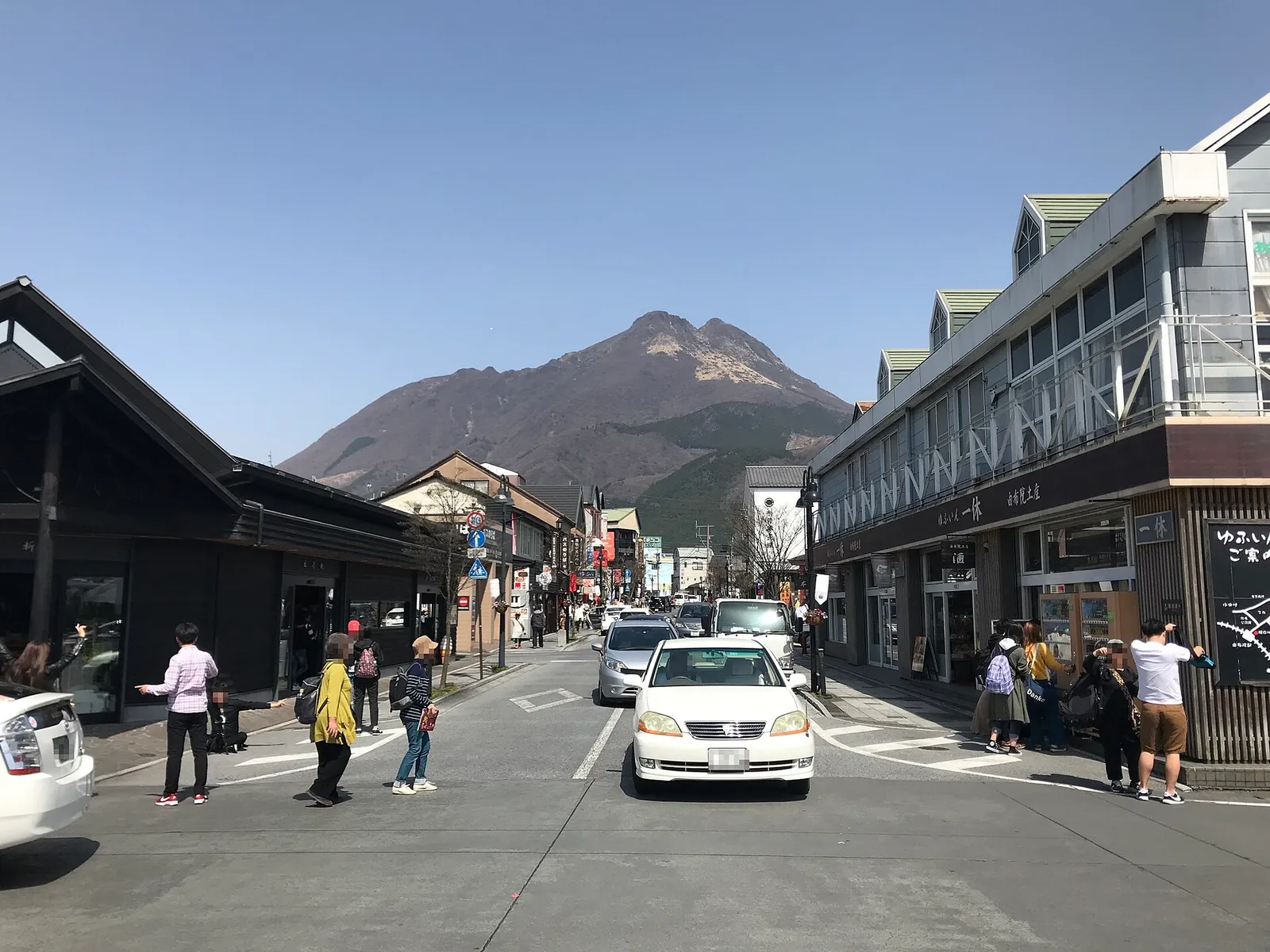
Kyushu runs on steam. Japan’s southern big island is a cluster of volcanoes that pipe hot water into resort towns, and this loop strings the best of them into a circle small enough to finish in ten unhurried days: out of Fukuoka, two nights in the boiling spa city of Beppu, a slow ryokan day in Yufuin, two days of layered history in Nagasaki, and Kumamoto’s rising castle before the train home. Fly in and out of Fukuoka, ride the loop clockwise, and let every afternoon end in a bath. First-timer bath nerves are covered in our onsen guide.
Day 1: Arrive in Fukuoka
Fukuoka Airport is five minutes by subway from Hakata Station — the easiest big-city arrival in Japan — so you can be checked in by mid-afternoon. Spend the evening the local way: the open-air yatai food stalls along the Nakasu riverbank, red-lantern lit from about 6 p.m., seven or eight seats each, one bowl of tonkotsu ramen standing between you and understanding this city.
Practical tip: Stalls take one group at a time and close one day a week each (often Sunday, and always in heavy rain) — order a drink and something grilled, pay cash, and have a ramen shop as backup.
Day 2: Fukuoka — Castle Moat and Canal
A gentle city day before the loop begins: the two-kilometer lake loop of Ohori Park on the site of the old castle moat, lunch at a market or the Canal City complex’s ramen stadium, and the Kushida Shrine in the old Hakata quarter. Between them, the department-store food basements around Hakata and Tenjin will explain why Fukuoka punches above its culinary weight.
Practical tip: Buy your Northern Kyushu rail pass tonight (see Practical Notes) if you have not — you want it live by tomorrow morning’s Sonic, not by tomorrow’s ticket queue.
Day 3: Sonic to Beppu
The Sonic limited express threads the coast east: Hakata to Beppu in about 2 hours 10 minutes (¥6,380, as of October 2026). Drop bags and take the bus or a short taxi up to Myoban’s yunohana huts, where mineral “flower of hot water” has been scraped from steaming reed racks for centuries, then a first bath and an early dinner in the steam of Kannawa.
Practical tip: Beppu’s attractions fan out across eight separate onsen districts — base yourself near Beppu Station for the buses, and buy the wide version of the local bus day pass only on the day you actually chase the hells.
Day 4: Beppu — the Seven Hells
Beppu’s famous jigoku are hot springs too hot to bathe in, so you look instead: cobalt Umi Jigoku, blood-red Chinoike, the geyser at Tatsumaki, five more besides. The combined ticket is ¥2,400, valid two days, hells open 8 a.m. to 5 p.m. (as of October 2026). Lunch is jigoku-mushi — vegetables and eggs steamed by the vent itself in Kannawa — and the afternoon is a proper soak, or the retro sand bath downtown.
Practical tip: The hells cluster in two groups about fifteen minutes apart by bus; do the Kannawa cluster and the steam-cooked lunch in the same swing. Sand baths mean you will be buried, literally — book a slot on arrival.
Day 5: Bus Over the Pass to Yufuin
A 56-minute local bus (¥1,100) climbs from Beppu’s steam into Yufuin’s pastoral calm: cow pastures under Mount Yufu, a village-scale main street of cafes and craft shops, and Kinrin Lake steaming gently at the end of it. This is the loop’s slow day — check into an onsen ryokan, walk the lake at golden hour, and take the baths seriously.
Practical tip: Yufuin’s ryokan fill weekends months ahead, and dinner is at your ryokan — arrive by 3 p.m. Reserve the wood-paneled Yufuin no Mori limited express back to Hakata for tomorrow as soon as your dates are fixed; it sells out.
Day 6: Two Trains to Nagasaki
Morning coffee with a lake view, then the Yufu or Yufuin no Mori limited express back to Hakata (2 hours 15, ¥5,100, as of October 2026), and the Relay Kamome and Kamome shinkansen combo west to Nagasaki — about 1.5 hours with one cross-platform change at Takeo-Onsen (¥6,490 reserved). Arrive mid-afternoon; dinner in Shinchi, Japan’s oldest Chinatown, where champon noodles were invented for Chinese students.
Practical tip: This is the loop’s heaviest transit day (about 4.5 hours riding) — the 9-something departures out of Yufuin land you in Nagasaki by 3 p.m., and luggage lockers at Hakata are the backup if connections tighten.
Day 7: Nagasaki — Peace Park to Harbor Hills
A city of intersections: the Peace Park and Atomic Bomb Museum (a few hundred yen; two quiet hours) in the morning, then the slopes above the harbor — Oura Church, the Western mansions of Glover Garden, the recreated Dutch trading post of Dejima. After dark, the ropeway up Mount Inasa for the night view that ranks with Hong Kong and Monaco’s.
Practical tip: The streetcar system is flat-fare, a few hundred yen a ride, and covers everything above; a day pass pays only if you zigzag — one-way loops on foot suit Nagasaki’s slopes better.
Day 8: Back East to Kumamoto
Return by Kamome to Hakata (¥6,490) and the Kyushu Shinkansen south to Kumamoto — 40 minutes on the Tsubame (about ¥5,300, as of October 2026). Kumamoto Castle’s keep has reopened and its walls keep emerging from earthquake scaffolding, a resurrection worth an hour; finish with the compact stroll garden of Suizenji and its miniaturized Tokaido.
Practical tip: Lockers at Kumamoto Station beat dragging bags up the castle hill; with a spare half-day, the smoking caldera of Mount Aso sits about an hour and a half northeast by JR line — mind the eruption-status notices.
Day 9: Tsubame Home, Dazaifu Detour
Ride the shinkansen back to Hakata in the morning (about ¥5,300) and give Fukuoka a farewell bow: the Nishitetsu train from Tenjin to Dazaifu Tenmangu, shrine of learning under 6,000 plum trees (¥480 each way, 25-40 minutes), with the Kyushu National Museum next door for whoever has museum legs left. Back in town for a final yatai night — or the counter seats of a tonkotsu shop.
Practical tip: Dazaifu’s approach street does the best souvenir grazing of the loop; the shrine grounds are free and always open, but the museum closes Mondays — check tonight’s flight math against it.
Day 10: Fly Out of Fukuoka
The subway links Hakata to the airport in five minutes for roughly ¥260, running every few minutes — you can realistically make a mid-morning flight with a 90-minute alarm. If the afternoon is yours, one more lap of Ohori Park or the Nanzoin temple’s 41-meter reclining Buddha (a short train ride, free entry) closes the loop properly.
Practical tip: International and domestic terminals are a short free bus apart and the subway reaches both — confirm which one tonight, then finish the last of your cash at a yatai, not an airport kiosk.
Practical Notes
Intercity transport
| Leg | Mode | Time | One-way cost (approx.) |
|---|---|---|---|
| Hakata → Beppu | Sonic limited express | ~2 h 10 | ¥6,380 |
| Beppu → Yufuin | Kamenoi local bus | 56 min | ¥1,100 |
| Yufuin → Hakata | Yufu / Yufuin no Mori ltd exp | 2 h 15 | ¥5,100 |
| Hakata → Nagasaki | Relay Kamome + Kamome via Takeo-Onsen | ~1.5 h | ¥6,490 |
| Hakata → Kumamoto | Kyushu Shinkansen Tsubame | ~40 min | ~¥5,300-5,900 |
| Tenjin ⇄ Dazaifu | Nishitetsu train (with transfer) | 25-40 min | ¥480 |
| Hakata ⇄ Airport | Subway | 5 min | ~¥260 |
Fares as of October 2026; limited express figures are per current timetables, with reserved-seat shinkansen totals and unreserved-seat conventional fares as noted — reconfirm on the JR Kyushu or Nishitetsu sites when booking. City transport is IC card territory throughout.
Budget estimate (per person, excluding international flights, 10 days)
- Backpacker: US$1,300-1,800 — guesthouses, market meals, higaeri day-baths instead of ryokan nights
- Mid-range: US$2,100-3,100 — 3-4-star hotels plus one Yufuin onsen-ryokan night with dinner, Beppu hells and sand bath
- Comfort: US$3,300-4,700 — Ryokan-forward: Yufuin and Beppu lodgings with kaiseki, Inasa view dinner, Green Cars
The onsen-ryokan share of the budget is the variable: a night with two multi-course meals in Yufuin can equal three nights of city hotel.
Pass verdict: the Northern Kyushu pass earns its keep
The JR Kyushu Northern Area Pass costs ¥15,000 for 3 days / ¥17,000 for 5 (about ¥1,000 less booked on JR Kyushu’s official site), as of October 2026, and covers everything JR on this loop: the Sonic, the Yufu and Yufuin no Mori, the Kamome all the way to Nagasaki, and the shinkansen as far as Kumamoto (its southern boundary). This itinerary’s JR legs sum to roughly ¥35,000 point-to-point. Activate the 5-day version on Day 6 — the Yufuin-Hakata run through Day 9’s Tsubame legs total about ¥28,700 inside the window — buy the Day 3 Sonic as a single ticket, and the whole loop costs about ¥24,500 instead of ¥36,000: a saving of ¥11,000-12,000, the strongest pass result of any route in this series. The 3-day version (¥15,000) also pays if you compress. Skip the All-Kyushu and national passes — Kagoshima is not on this route. More in the JR Pass guide and the JR Pass calculator.
Booking checklist
- Yufuin onsen-ryokan (with dinner) and the Yufuin no Mori limited express: 1-3 months ahead — the wood-paneled trains sell out first
- Northern Kyushu pass: buy online before Day 3 for the discount; collect or activate at a JR Kyushu office
- Hakata’s Yatai stalls: no booking possible — queue early (6 p.m.) or after 9 p.m.
- Mount Inasa ropeway and Beppu sand bath: same-day bookings fine except festival weekends and Golden Week
- Nagasaki and Kumamoto hotels: 2-4 weeks ahead; both compact, both near their stations
Sources & verification (11)
- https://www.jrkyushu.co.jp/english/railpass/
- https://www.japan-guide.com/e/e2361_05.html
- https://beppu-jigoku.com/fee/index.html
- https://www.japan-guide.com/e/e4705.html
- https://www.japan-guide.com/e/e4850.html
- https://www.japan-guide.com/e/e4803.html
- https://transit.yahoo.co.jp/search/result?from=%E5%8D%9A%E5%A4%9A&to=%E5%88%A5%E5%BA%9C&type=1&y=2026&m=10&d=6&hh=08&m1=0&m2=0&expkind=1&ws=2&s=0&al=1&shin=1&ex=1&hb=1&lb=1&sr=1&lf=0
- https://transit.yahoo.co.jp/search/result?from=%E5%88%A5%E5%BA%9C&to=%E7%94%B1%E5%B8%83%E9%99%A2&type=1&y=2026&m=10&d=6&hh=09&m1=0&m2=0&expkind=1&ws=2&s=0&al=1&shin=0&ex=1&hb=1&lb=1&sr=1&lf=0
- https://transit.yahoo.co.jp/search/result?from=%E7%94%B1%E5%B8%83%E9%99%A2&to=%E5%8D%9A%E5%A4%9A&type=1&y=2026&m=10&d=6&hh=14&m1=0&m2=0&expkind=1&ws=2&s=0&al=1&shin=1&ex=1&hb=1&lb=1&sr=1&lf=0
- https://transit.yahoo.co.jp/search/result?from=%E5%8D%9A%E5%A4%9A&to=%E7%86%8A%E6%9C%AC&type=1&y=2026&m=10&d=7&hh=09&m1=0&m2=0&expkind=1&ws=2&s=0&al=1&shin=1&ex=1&hb=1&lb=1&sr=1&lf=0
- https://transit.yahoo.co.jp/search/result?from=%E5%8D%9A%E5%A4%9A&to=%E9%95%B7%E5%B4%8E&type=1&y=2026&m=10&d=7&hh=09&m1=0&m2=0&expkind=1&ws=2&s=0&al=1&shin=1&ex=1&hb=1&lb=1&sr=1&lf=0