The Alpine Route: Nagoya to Kyoto through Takayama and Shirakawago
The classic Dragon Route through the Japan Alps: start in underrated Nagoya, climb by limited express into the preserved merchant town of Takayama, bus over the passes to the thatched village of Shirakawago, drop down to Kanazawa's samurai streets and Kenrokuen, and finish with Kyoto at its best pace. Ten days, three UNESCO-flavored stops, one reserved-seat headache solved — the Practical Notes explain exactly which buses need reservations and when the ¥19,800 Takayama-Hokuriku regional pass beats point-to-point (it does, modestly, if your five rail days fall right), why the national JR Pass loses on this route by more than ¥20,000, and how to bolt on the snow-wall crossing of the Tateyama-Kurobe Alpine Route between mid-April and November.
Route: Nagoya Takayama Shirakawago Kanazawa Kyoto
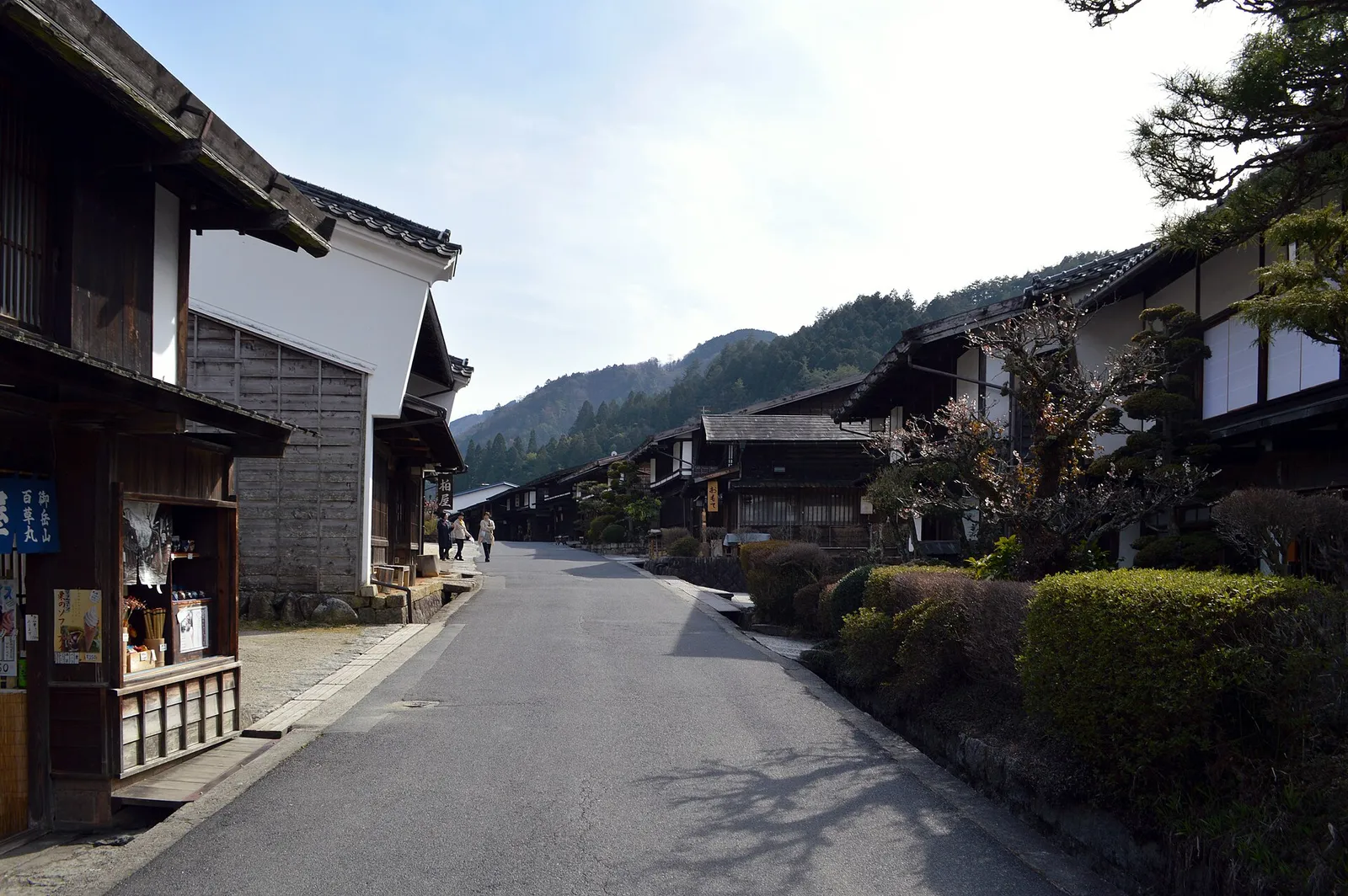
The Alps are Japan’s middle country, and this route threads them top to bottom: Nagoya — the food-mad, castle-owning metropolis foreigners keep skipping — then the Hida limited express into mountain-girdled Takayama, buses over two passes to the gassho farmhouse village of Shirakawago, down to the samurai lanes and great garden of Kanazawa, and a final flourish in Kyoto. Fly into Chubu Centrair and out of Kansai: the line only runs one way. Distances are short but seats are scarce — on this route, more than any other, the trip is made by the reservations you make before you leave home.
Day 1: Arrive in Nagoya
The Meitetsu airport train brings Centrair to Nagoya Station in under 40 minutes; check in and spend the afternoon on the castle’s gilded dolphins and the atmospheric shrine forest of Atsuta, home of the sacred sword. Dinner is Nagoya’s specialty axis — miso katsu, tebasaki chicken wings, or hitsumabushi eel — and the station’s restaurant towers make it easy.
Practical tip: Base yourself beside Nagoya Station: it is both your airport gateway and the departure point for the Day 3 Hida, and the Takashimaya dining floors above it will rescue any jet-lagged evening.
Day 2: Nagoya — Trains, Osu, Red Miso
A day for the city’s twin obsessions. Morning at the SCMaglev Railway Park, where full-size shinkansen and the record-setting maglev hardware explain the country you are about to ride through; afternoon in Osu’s temple-and-market district of secondhand shops, street snacks and retro arcades between them.
Practical tip: The railway museum needs a timed entry ticket that sells out on weekends and holidays — book online the night before, and check the return shuttle bus times from Kinjofuto Station when you arrive.
Day 3: Hida Limited Express to Takayama
One of Japan’s great rail rides: the Hida climbs river gorges for 2 hours 15 minutes from Nagoya to Takayama (¥5,610 unreserved, as of October 2026), roughly hourly. Arrive by early afternoon and give the rest of the day to Sanmachi’s dark-wood merchant lanes, sake breweries and the Miya river willows at dusk.
Practical tip: Reserve both today’s Hida seats and tomorrow’s Shirakawago bus the moment dates are fixed — the bus especially is the trip’s scarcest ticket. Purists add a day to walk the old Nakasendo trail between the preserved post towns of Magome and Tsumago, south of the route.
Day 4: Shirakawago Day Trip
The 50-minute Nohi bus (¥2,800 each way, reserved) crosses to the UNESCO village of gassho-zukuri houses, their steep thatch built to shed generations of snow. Walk Ogimachi’s lanes, tour the open-hearth interior of the Wada House, and climb to the castle-mount viewpoint while the morning light is still on the thatch.
Practical tip: Day-trippers flood in from 10 a.m. and the village thins after 3 — take an early bus out and a late one back, and note the last connections when reserving; a wrong guess means a ¥15,000 taxi lesson.
Day 5: Morning Market, Then Bus to Kanazawa
Takayama’s Miyagawa morning market sets up along the river from about 7 a.m. — pickles, mountain vegetables, grilled rice balls — and the midday direct bus runs 2 hours 15 minutes north to Kanazawa (¥4,200, as of October 2026). Check in, then start with the great garden: Kenrokuen at dusk (¥320), where the garden’s lantern-lit stones outperform every photo of them.
Practical tip: The direct Takayama-Kanazawa bus also wants a reservation, and the same ticket covers the routing via Shirakawago if the direct run is full — both are shown on the Nohi booking site, so compare there before deciding.
Day 6: Kanazawa — Samurai and Gold Leaf
The compact walking day: Higashi Chaya’s teahouse facades in the morning light, a crab-and-uni lunch at Omicho Market, the earthen-walled Nagamachi samurai quarter in the afternoon, and gold leaf applied to everything purchasable. Rain rotates the day into the 21st Century Museum of Contemporary Art without loss.
Practical tip: Kanazawa closes early — most entries end by 5 p.m. — so sightsee clockwise from breakfast and keep the station loop bus (¥220) in mind for tired legs; it ties all four districts together.
Day 7: To Kyoto
The Thunderbird and the Hokuriku Shinkansen connect through Tsuruga to bring you to Kyoto in about two hours (¥7,520, as of October 2026). Spend the late afternoon walking down the Higashiyama slope — Kiyomizu-dera’s stage, the Sannenzaka lanes — so the first evening ends in Gion at lantern-lighting hour, dinner along Pontocho.
Practical tip: Book this leg’s seats together with Day 3 when you reserve; the Tsuruga transfer is cross-concourse and the connection times are generous, but the through-seats are not unlimited.
Day 8: Kyoto East
The two-clock morning: Fushimi Inari at 7 a.m., when the thousand vermilion torii are quiet and cool, back down by 9:30; then temples and lanes east of the Kamo — Tofukuji’s gardens or Sanjusangendo’s thousand statues — and Gion’s evening. This is the tourist-heavy side of Kyoto, which is exactly why the day starts at dawn.
Practical tip: Fushimi Inari needs no ticket — only an alarm. The Keihan line runs direct from Gion to Inari station in minutes; buses at this hour lose an hour to traffic.
Day 9: Kyoto West
Arashiyama early: the bamboo grove before 9, the Togetsukyo river views, maybe a monkey-park climb. After lunch cross town to Kinkaku-ji, the Golden Pavilion (¥500), and Ryoan-ji’s rock garden next door for the sitting-down finale. Pack tonight — tomorrow is an airport morning.
Practical tip: The Keifuku Randen tram is the scenic approach to Arashiyama and a sight itself; buy your Haruka airport seat for tomorrow on any JR machine tonight, not at 8 a.m. in a queue.
Day 10: Haruka to Kansai Airport
The Haruka limited express runs Kyoto to Kansai Airport in about 80-90 minutes (¥3,060, as of October 2026), and KIX’s island terminal rewards early arrivals with restaurants rather than queues. If your flight is late enough, a final walk through the Fushimi Inari approach or a bowl of ramen at Kyoto Station’s ramen street fills the morning honestly.
Practical tip: Reserve the Haruka the night before — commuter-hour trains to the airport fill with luggage, and the reserved car is the difference between a seat and a doorway.
Practical Notes
Intercity transport
| Leg | Mode | Time | One-way cost (approx.) |
|---|---|---|---|
| Centrair Airport → Nagoya | Meitetsu airport train | ~40 min | ~¥1,000 |
| Nagoya → Takayama | Hida limited express | 2 h 15 | ¥5,610 (unreserved) |
| Takayama ⇄ Shirakawago | Nohi bus (reserved) | 50 min | ¥2,800 |
| Takayama → Kanazawa | Nohi direct bus (reserved) | ~2 h 15 | ¥4,200 |
| Kanazawa → Kyoto | Thunderbird + Hokuriku Shinkansen via Tsuruga | ~2 h | ¥7,520 |
| Kyoto → Kansai Airport | Haruka limited express | ~80-90 min | ¥3,060 |
Fares as of October 2026 per current timetables; a fare revision on some Nohi bus routes takes effect December 2026 — reconfirm on the operator’s site when booking. Hida figures are unreserved-seat totals; reserved seats run a few hundred yen more.
Optional: the Tateyama-Kurobe Alpine Route
If your dates fall between mid-April and the end of November — the 2026 season runs April 15 to November 30 — you can trade the Day 5 bus for the full Alpine Route crossing: Takayama to Toyama by Hida, then ropeways, trolleybus and Japan’s highest dam road over the spine to Shinano-Omachi, where the snow walls stand through June. It adds a day and roughly ¥10,000 of fares, and web tickets reserve a boarding time slot.
Budget estimate (per person, excluding international flights, 10 days)
- Backpacker: US$1,300-1,800 — guesthouses and market food, all transport above
- Mid-range: US$2,000-2,900 — 3-4-star hotels plus one ryokan night in Takayama or Kaga Onsen
- Comfort: US$3,000-4,400 — Riverside ryokan with kaiseki, Green Car on the Hida, a Gion dinner
Nagoya and Takayama run cheaper than Kyoto; put the savings into the ryokan night rather than the Kyoto hotel tier.
Pass verdict
No national pass comes close: the 7-day JR Pass (¥50,000) would cover only about ¥16,000 of this route’s JR legs and none of its ¥9,800 in buses — a ¥25,000-plus loss. The one regional pass that fits is the Takayama-Hokuriku Area Tourist Pass (¥19,800, five consecutive days, foreign visitors only, as of October 2026): it covers the Hida from Nagoya, the Shirakawago buses in both directions, the direct Takayama-Kanazawa bus, the Hokuriku Shinkansen and Thunderbird into Kyoto — and even the Haruka to KIX if you squeeze the window later. On this exact schedule, activating on Day 3 covers about ¥22,900 of tickets against the pass’s ¥19,800, roughly a ¥3,000 win; compress or skip a day and point-to-point’s ¥26,000 all-in total is already low enough not to care. Read the JR Pass guide or test your own shape in the JR Pass calculator.
Booking checklist
- Shirakawago day-trip buses (both directions) and the Takayama-Kanazawa direct bus: reserve as soon as dates are fixed — foliage season (late October-November) sells out weeks ahead; book via the Nohi site or by phone
- Hida reserved seats, Nagoya-Takayama: a few days ahead, earlier for weekend mornings
- Takayama ryokan or a Shirakawago farmhouse overnight (the upgrade worth making): 1-3 months ahead
- SCMaglev Railway Park entry: online timed ticket, the night before at the latest
- Alpine Route web tickets (if taking the option): reserve the boarding slot once your Toyama-side timings are fixed
Sources & verification (8)
- https://www.japan-guide.com/e/e5908.html
- https://www.nouhibus.co.jp/route_bus/shirakawago/
- https://www.japan-guide.com/e/e2361_takayama_hokuriku.html
- https://www.alpen-route.com/en/
- https://www.japan-guide.com/e/e4200.html
- https://www.japan-guide.com/e/e3915.html
- https://transit.yahoo.co.jp/search/result?from=%E5%90%8D%E5%8F%A4%E5%B1%8B&to=%E9%AB%98%E5%B1%B1&type=1&y=2026&m=10&d=6&hh=08&m1=0&m2=0&expkind=1&ws=2&s=0&al=1&shin=1&ex=1&hb=1&lb=1&sr=1&lf=0
- https://transit.yahoo.co.jp/search/result?from=%E4%BA%AC%E9%83%BD&to=%E9%96%A2%E8%A5%BF%E7%A9%BA%E6%B8%AF&type=1&y=2026&m=10&d=9&hh=10&m1=30&m2=0&expkind=1&ws=2&s=0&al=0&shin=0&ex=1&hb=1&lb=1&sr=1&lf=0