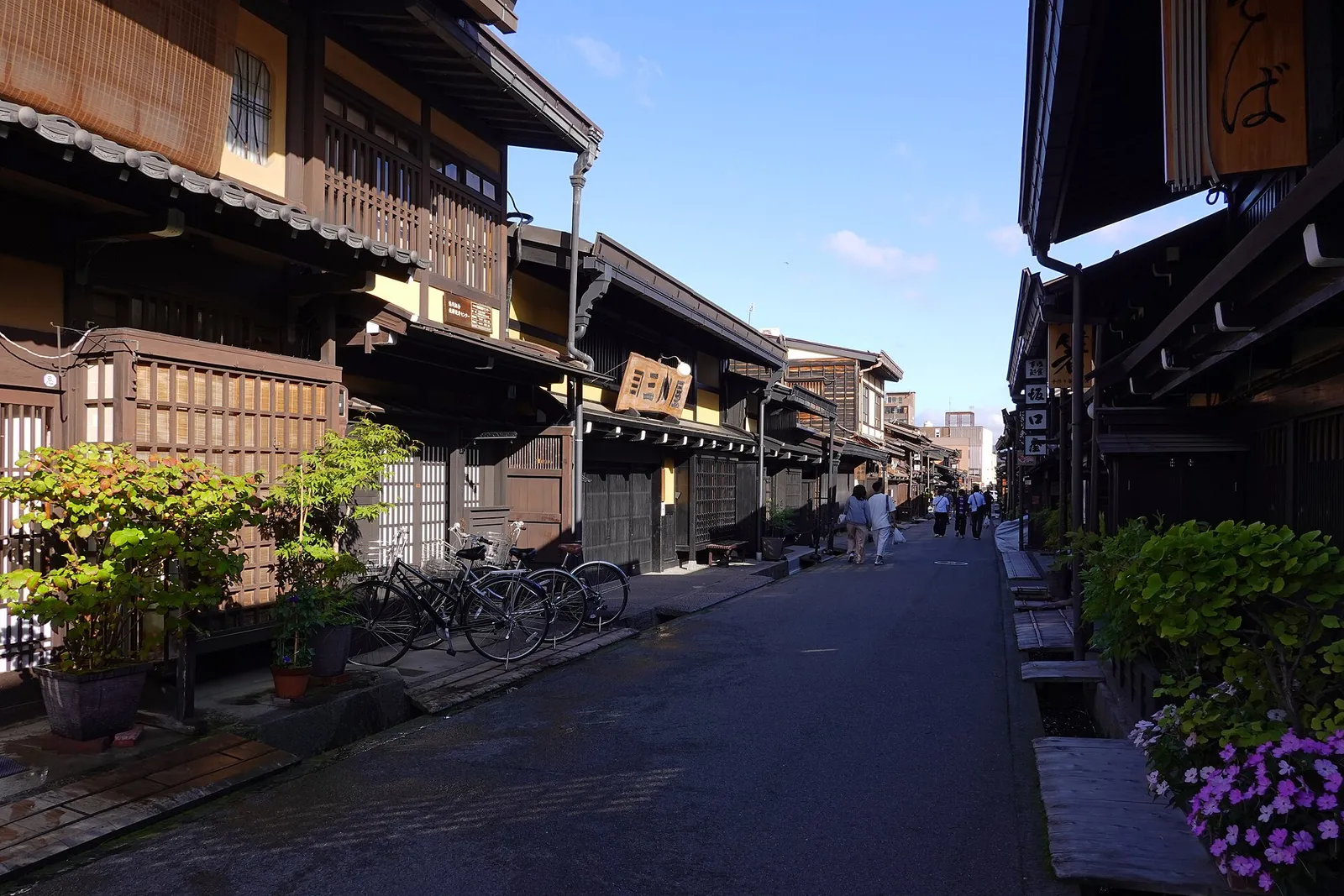
Takayama (often called Hida-Takayama) is the best-preserved castle town in the Japanese Alps: a basin settlement whose 17th-century merchant quarter, Sanmachi, survives in black-timbered rows of sake breweries, pickle shops, and merchant houses, morning markets still trade along the Miyagawa River at dawn, and festival floats from the 1600s emerge twice a year for one of Japan's most beautiful festivals. Surrounded by mountains, it also serves as the practical base for Shirakawa-go, Kamikochi, and the Okuhida hot springs. It suits travelers who want pre-modern Japan without Kyoto's crowds — go early, when lanterns are still lit and the old town belongs to locals. Give it one full day, two if you are timing the festival or using it as an Alps base.
Top sights at a glance
No. 1
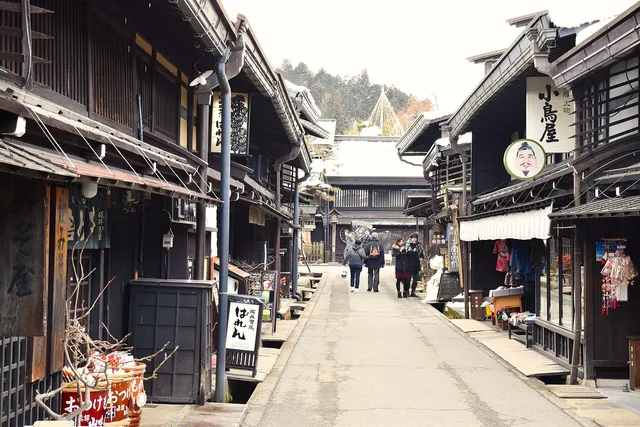
Sanmachi Old Town
The southern riverside quarter where Takayama's Edo-period merchant class built, brewed, and traded — and where Japan's most convincing old-town streetscape outside Kyoto survives. Sannomachi Street's rows of dark latticed houses hold sake breweries (marked by cedar-leaf sugidama balls over their doors), miso and pickle merchants, coffee shops in storehouses, and two merchant mansions open to the public. It is compact, walkable in an hour or a morning, and transforms completely with light: tour-group busy at noon, softly lit and quiet after 5 p.m.
Good to know · Free to wander; shops typically open 9:00-17:00, as of October 2026. Kusakabe Heritage House costs ¥1,000 (closed Tuesdays), Yoshijima Heritage House ¥500. It is a 10-minute walk from Takayama Station — go at 8:30 a.m. for empty streets, or after 17:00 for lantern atmosphere.
No. 2
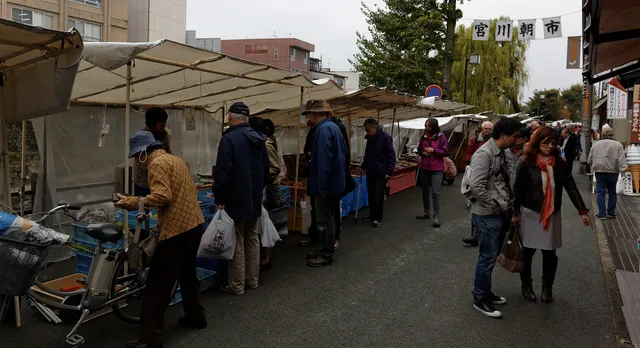
Miyagawa Morning Market
Two daily riverside markets — the larger Miyagawa market along the old town's riverbank, and the Jinya-mae market in front of the old government office — where farmers and craftspeople sell pickles, mountain vegetables, dried flowers, wooden carvings, and grilled snacks from low stalls. The tradition traces back to the castle-town era's rice and mulberry markets. It is less a sight than a habit: the markets wind down by noon, so they impose early rising, which in Takayama pays off anyway.
Good to know · Free to browse, held daily; stalls run roughly 6:00-12:00 at Jinya-mae (from 7:00 January-March) and 7:00-12:00 at Miyagawa (from 8:00 December-March), as of October 2026. Bring coins — many stalls are cash-only — and pair the market with a walk across the neighboring bridges while Sanmachi is still empty.
No. 3
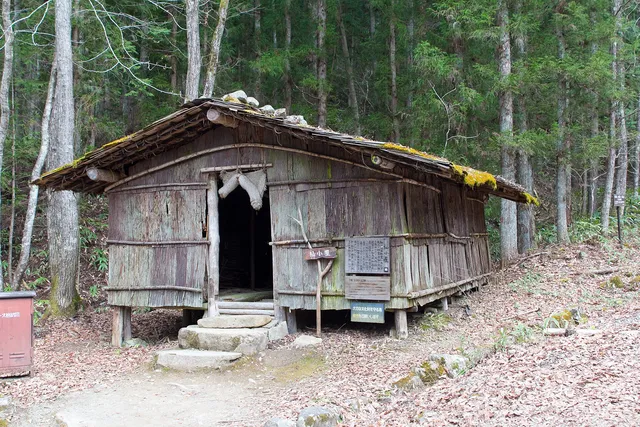
Hida Folk Village
An open-air museum of over 30 traditional houses gathered in 1971 from across the Hida region, including steep-roofed gassho-zukuri farmhouses relocated from near Shirakawa-go, a village headman's residence, logging huts, and storehouses, all arranged on a hillside around ponds and iremi hearths that staff light each morning. Inside, the houses show tools, looms, and daily-life displays from the mountain economy that produced Hida's famous carpenters. It is the best place to understand the architecture you will see the next day in Shirakawa-go.
Good to know · ¥700, open daily 8:30-17:00, as of October 2026; plan about two hours. Ten minutes by the Sarubobo Bus from Takayama Station (¥100 a ride, ¥500 day pass) or a 30-minute walk. The crafts center next door runs walk-in workshops (¥800-3,000) like sarubobo doll-making, generally closed Thursdays.
No. 4
The Takayama Festival Floats
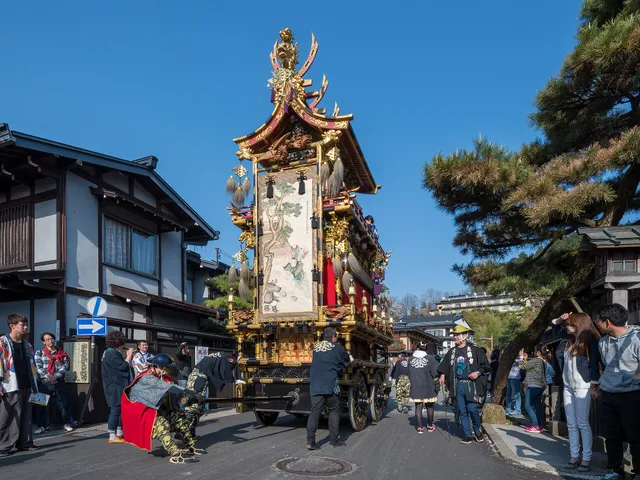
Takayama's spring and autumn festivals (April 14-15 and October 9-10) rank among Japan's three most beautiful, alongside Kyoto's Gion Matsuri — each centered on about a dozen gilded 17th-century floats, or yatai, that are pulled through the old town by teams in period dress. Karakuri marionette performances on some floats are government-recognized craft; the night processions, with hundreds of lanterns lit on the floats, are the peak. Between festivals, the floats live in storehouses across Sanmachi and four of the autumn eleven are displayed at the Yatai Kaikan hall.
Good to know · Yatai Kaikan: ¥1,000, open 9:00-17:00 (until 16:30 December-February), by Hachiman Shrine at the old town's north end, as of October 2026. If you are actually coming for the festival, book rooms months ahead — several hundred thousand visitors attend, and floats may stay garaged in heavy rain (storehouse doors open for viewing instead).
No. 5
Takayama's Sake Breweries
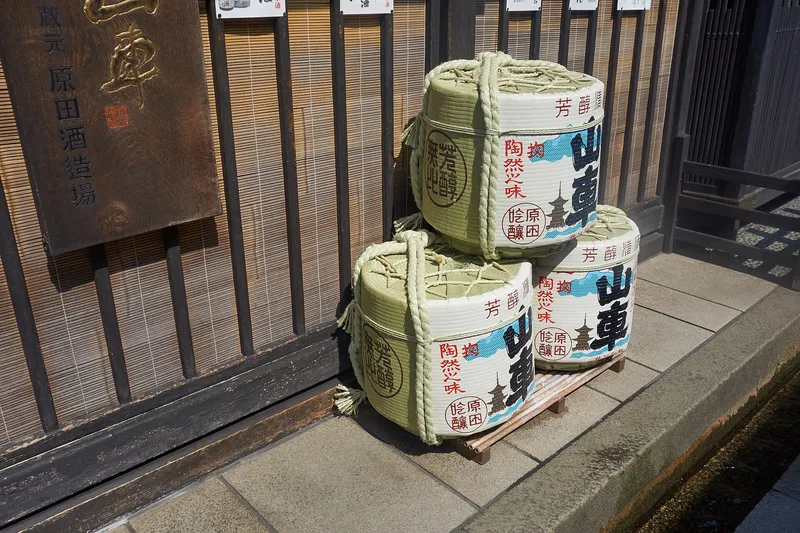
Cold mountain winters, soft water, and Hida rice made this basin a brewing town, and a remarkable number of working kura remain in Sanmachi's old houses — look for the sugidama, a ball of cedar leaves hung over the door when new sake is ready; it browns as the season ages. Several breweries welcome visitors for free tastings at wooden counters and sell small bottles, unpasteurized namazake, and sake-based sweets. It is a low-key, high-yield stop between the old town's shops.
Good to know · Tasting rooms generally open with the shops, 9:00-17:00, as of October 2026, and are free. Breweries stop pouring to drivers by law — plan to walk, and pace yourself across three or four counters. A tub of local sake with Hida beef at dinner is the correct ending; bottles travel well if padded in your suitcase.
See it in motion
Some places earn a moving picture
Stills can't show how this place moves — the drift, the light show, the crowd flow. We picked a recent, high-quality walkthrough rather than a promotional cut.
Japan's Best Preserved Old Town? Hida Takayama, Japan 🇯🇵 Walking Tour 4K
The Transit Lens · YouTube · plays on click
Embedded via YouTube's official player (privacy-enhanced mode). Video: Japan's Best Preserved Old Town? Hida Takayama, Japan 🇯🇵 Walking Tour 4K by The Transit Lens. Not affiliated with Japan Travel Navi; screened for quality and accuracy on 2026-10-06.
Takayama is what people picture when they say they want “old Japan”: a mountain-basin town of dark wooden houses, brewing sake and putting pickles out in riverbank stalls at dawn, an easy two-and-a-half-hour train ride from Nagoya yet feeling much further. The core is small — you can cross the old town in fifteen minutes — but it is real: Sanmachi’s merchant rows are working shops and breweries, not a theme park, and the surrounding Hida region supplies the mountains, farmhouses, and hot springs that fill your second day. Come for the streetscape, stay because everything around it — Shirakawa-go, Kamikochi, the festival floats — radiates outward from here.
A Bit of History
Takayama grew rich because of trees. The Hida region’s mountains produced superb timber and, more famously, the carpenters who worked it — Hida craftsmen were conscripted to build palaces and temples in Kyoto and Nara from the 8th century onward, and their joinery tradition survived into the town’s merchant architecture. The Kanamori family ruled the basin as castle lords from the late 1500s, laying out the town around a castle and fostering the merchants, brewers, and artisans whose descendants still run Sanmachi.
Then, in 1692, the shogunate took direct control of Hida — the timber and its gold were that valuable — and dispatched administrators from Edo to a government office called Takayama Jinya. That building, rebuilt in 1816 and used continuously by government officials until 1969, is the only one of its kind left in Japan, and its ¥440 admission is the town’s best history lesson: tatami offices, an interrogation room with visible bindings, and Japan’s largest traditional rice storehouse next door. The merchant class, meanwhile, did what merchant classes do — built ever finer houses along the rivers, endowed the shrines whose festivals became the Takayama Matsuri, and brewed sake that still fills the district’s storehouses. Isolation preserved everything: the basin sat hours from the nearest rail line until 1934, and modern development largely happened elsewhere. Since the 1990s the town has lived on tourism, carefully, with an ear to what the carpenters built.
Culture & Daily Life
Takayama’s daily rhythm rewards early risers disproportionately. The morning markets pack up at noon, the old town photographs best before 9, and by mid-afternoon the day-trip crowds from Nagoya thin out again, leaving the lantern-lit evening streets to overnight guests. Winter doubles the effect: snow settles on the latticed facades, the town is genuinely cold (it is one of Japan’s snowier cities outside Hokkaido and the Japan Sea coast), and the sake season peaks.
Two local crafts to notice. The sarubobo — a red, faceless monkey amulet sewn by mountain grandmothers as a child’s toy and luck charm — is everywhere, from keychains to the town’s cute bus livery. And Hida woodwork, especially ichii itto-bori carving from yew, shows up in the shops and the folk village’s workshops. Food culture leans mountain: river fish, wild vegetables, fermented miso, and Hida beef, the region’s name-brand wagyu, which appears in ways cheap and cheerful (skewers, sushi slices) as well as splurgy (sukiyaki dinners).
Practically, Takayama is a compact walking town with a cash-and-card mix: the breweries and market stalls prefer coins, restaurants take cards reluctantly if at all, and convenience stores exist but are not on every corner. IC cards from Tokyo or Osaka work on the local buses but are not universal in shops — carry some cash, per our payments guide (/guides/money-and-payments/). English signage is decent in the old town, thinner once you head into the hills.
Nature & Day Trips
The town sits at the bottom of a bowl of 2,000-meter peaks, and everything good radiates outward. Shirakawa-go’s thatched gassho village is 50 minutes by highway bus (¥2,800 one way) and has its own page in this guide. West of it, the UNESCO-listed Gokayama hamlets of Suganuma and Ainokura are quieter still. South of Takayama, the Hida River valley carries the rail line down to Gero Onsen, one of Japan’s better hot-spring towns; north, the Okuhida region strings together five onsen villages below the Northern Alps, with the Shin-Hotaka ropeway climbing for alpine panoramas. Kamikochi — the strictly protected highland valley at the foot of Mt. Yari and the Hotaka range, and arguably central Japan’s best day in the mountains — is a 60-90 minute bus ride in season (the private road closes mid-November to mid-April, and reservations are required in high season).
If you are threading Takayama, Shirakawa-go, and Kanazawa together — you should; it is one of Japan’s great mountain routes — our Alpine Japan itinerary does exactly that (/itineraries/alpine-japan-itinerary/). Nagoya is the big rail gateway to the south (/destinations/nagoya/), Kanazawa the castle-and-garden payoff to the west (/destinations/kanazawa/). In town, the Higashiyama walking course — a temple-lined path over the former castle hill from the old town’s northeast corner — takes about an hour and is the best free walk in Takayama.
Food & Drink
Hida beef is the headline: the region’s wagyu, richly marbled and cheaper here than in Tokyo or Osaka. The smart plays are the casual formats — Hida beef sushi (a yen-coated slice over rice, sold at old town counters for a few hundred yen), kushiyaki skewers off charcoal grills at the morning market and food stalls, and, for the splurge, a sukiyaki or steak dinner in a machiya restaurant (budget ¥5,000-10,000 per person with a drink; reserve in advance at the better places).
Beyond beef, the mountain larder shows up as hoba miso — miso paste griddled on a magnolia leaf, sometimes with meat or vegetables; soba noodles; sansai mountain vegetables in tempura and soups; river fish grilled on skewers; and pickles — Takayama’s miso-dipped vegetables sold by the barrel along Sanmachi and at the morning market. The local comfort bowl is Takayama ramen, a soy-based chuka soba with thin curly noodles served at longstanding shops near the old town (expect ¥800-1,000, cash-friendly). Graze rather than banquet: a market skewer mid-morning, a pickle-and-rice lunch, sake counter stops in the afternoon, and one proper dinner is a very good Takayama day. Sake deserves its own paragraph — see the brewery entry below — but note that tastings are free and the breweries are within a five-minute walk of each other.
Top Sights
Sanmachi Old Town
Sanmachi is the reason you came: three short streets of black-timbered, latticed merchant houses along the Miyagawa’s east bank, dating to the 1600s-1800s and still in commercial use — sake breweries, miso and pickle merchants, rice cracker bakers, comb makers, cafés in storehouse interiors. The detail to look up at: the sugidama cedar balls over brewery doors and the lattice density of the windows, which announced a merchant’s wealth (finer lattices for richer merchants, by local tradition).
Do it twice, at different hours. At 8:30 a.m. the streets are empty except for shopkeepers sweeping, the light is low and warm, and photographers get the postcard frames. From late morning through mid-afternoon, Sanmachi belongs to the crowds — duck one block east or west into ordinary streets, or go inside things: the Kusakabe Heritage House (¥1,000, closed Tuesdays) and Yoshijima Heritage House (¥500) are adjacent merchant mansions whose timber joinery and massive beams are the finest interior architecture in town. After 17:00 the shops shut and lanterns come on; the bars and restaurants keep a couple of lanes alive into the evening, and a riverside walk with a warm can of amazake from a vending machine is underrated. The History & Art Museum on the edge of the district is free and a good rainy-day hour.
Miyagawa Morning Market
Two markets run daily until noon: the Miyagawa market on the old town’s riverbank — the bigger, more scenic one, stalls fronting the water under green awnings — and the Jinya-mae market in the small square in front of Takayama Jinya. Between them you will find farm vegetables and pickles, dried flowers and wreaths, wooden ladles and carved trays, sarubobo, grilled dango skewers, and the aforementioned Hida beef skewers, plus farmers who will offer you a slice of fruit with gestures. The tradition descends from the silk-and-rice markets of the Edo period, and enough actual farmers still sell here that it has not fully become a craft market.
Go between 7:00 and 9:00 — by 11:00 stalls are packing up, and in winter the start shifts an hour later (Miyagawa from 8:00 December-March, as of October 2026). Bring ¥1,000-2,000 in coins, buy skewers and pickles for later, and let breakfast be the market plus coffee in a Sanmachi café. If you miss the morning entirely, the Jinya-mae market is the more compact catch-up stop.
Hida Folk Village
Hida no Sato sits on a forested slope ten minutes west of the station and does the thing open-air museums rarely manage: it feels like a place, not a collection. Over 30 buildings from across the Hida region — gassho-zukuri farmhouses with their steep thatch, a village headman’s grand residence, shrine buildings, storehouses on stilts, charcoal-burner’s huts — were relocated here starting in 1971 and arranged around ponds connected by irrigation channels. Staff light the open hearths each morning, so several houses smell of pine smoke; inside are looms, tools, sledges, and the silk-raising attics that explain the gassho roof’s shape.
The visit is a slow hour-and-a-half to two hours, and it front-loads Shirakawa-go: after you have climbed into a gassho attic here, the village you see the next day makes sense as engineering rather than scenery. ¥700, open daily 8:30-17:00, as of October 2026. Take the Sarubobo Bus (¥100 a ride, ¥500 day pass) or walk 30 minutes from the station; the path up is signed and partly through ordinary neighborhoods, which has its own interest. The adjacent crafts center offers short workshops — sarubobo sewing, woodwork — from ¥800, generally no reservation needed, closed most Thursdays.
The Takayama Festival Floats
Even if you never see the festival itself, the floats explain the town. About a dozen yatai — gilded, lacquered mobile stages three centuries old, funded by the merchant guilds of each neighborhood — emerge twice a year: April 14-15 for the spring Sanno Festival of Hie Shrine, and October 9-10 for the autumn Hachiman Festival. Days bring processions and the karakuri marionette shows (top-tier puppetry performed with strings from the float’s upper stage); the evenings bring the yomatsuri, floats gliding through darkened streets under a hundred lit lanterns each — roughly 18:00-20:30 in spring, 18:00-21:30 in autumn, as of October 2026. Combined with the crowds — several hundred thousand people — the festival is magnificent and mobbed at once; rooms sell out months ahead, and rain keeps the floats garaged (storehouse doors open for viewing instead).
The rest of the year, see the floats in pieces. The Yatai Kaikan hall by Hachiman Shrine displays four of the autumn festival’s eleven floats, roped and lit, with the adjoining Nikkokan’s miniature Toshogu models; ¥1,000, 9:00-17:00 (until 16:30 December-February), as of October 2026. Walking Sanmachi afterwards, look for the tall float storehouses with their heavy doors and festival banners — and know that the karakuri performances (about 50 minutes, staged at set times on festival days) are the crafts Japan has officially designated.
Takayama’s Sake Breweries
Takayama’s kura are unusual in being both historic architecture and working industry. Six or so breweries operate in and around the old town, several in buildings centuries old, and the signs are easy: the sugidama — a hand-tied ball of cedar leaves hung at the eaves when the new season’s sake is pressed, browning gradually over the winter. Inside, breweries pour free tasting flights at wooden counters; you will be handed namazake (unpasteurized, seasonal-only), junmai, and perhaps a local plum wine, with nods and 「どうぞ」. The water here is soft, the rice local, and the cold long — the same equation as Nada’s, on a boutique scale.
Spend an afternoon hopscotching them: tasting rooms keep shop hours (9:00-17:00-ish), and everything is within a few Sanmachi blocks, so the walking is trivial. If a flight wins you over, 300-500 ml bottles fit a suitcase and survive the trip home; breweries also sell sake manju cakes and sake-lees sweets for same-day snacking. Drivers cannot taste — Japanese law stops breweries pouring, so plan on foot, and slot a rest with a riverside bench between counters. For what the labels mean and how to buy sake home, our food-first-timers guide has a section (/guides/japanese-food-first-timers/).
Getting There & Around
Takayama’s rail lifeline is the JR Hida limited express from Nagoya, one of Japan’s most scenic trains, which winds up the gorge in about 140 minutes (hourly departures, fully covered by the Japan Rail Pass). From Tokyo, ride the shinkansen to Nagoya and change — about 4.5 hours and ¥16,000 one way, as of October 2026 — or take the Hokuriku Shinkansen to Toyama and the Hida down from the north (roughly four hours on the best connections). Highway buses run from Shinjuku in 5.5 hours for ¥8,000. Westward, buses connect Takayama-Shirakawago-Kanazawa (¥2,800 and ¥4,200 one way respectively, about 16 round trips a day; some departures are reservation-only, so book ahead — two-hour delays are possible in snow season, as of October 2026).
The town itself is entirely walkable — station to old town is ten minutes — with local buses for the folk village and temples. IC cards and cash both work on buses; a rental bicycle is a pleasant alternative in warm months. Taxis cluster at the station and are reasonable for early-morning market runs with luggage.
Where to Stay
For one night, stay inside or on the edge of the old town: small ryokan and machiya guesthouses tucked into Sanmachi’s side lanes put you on the streets when they are empty at dawn and lantern-lit after dinner, which is the entire point of overnighting. Rooms are fewer, older, and pricier; book ahead for weekends and far ahead for the festival dates (April 14-15, October 9-10).
The practical alternative is around Takayama Station: modern mid-range hotels, bus connections to Shirakawa-go, Kamikochi, and the Okuhida onsen, and easy early departures — the right call if Takayama is a one-night transit stop on the Alps route. A third option, for onsen-seekers, is to sleep in the hills — Gero Onsen south or Okuhida north — and visit Takayama by day, though you trade the old town’s best hours for a soak.
Sources & verification (8)
- https://www.japan-guide.com/e/e5900.html
- https://www.japan-guide.com/e/e5901.html
- https://www.japan-guide.com/e/e5903.html
- https://www.japan-guide.com/e/e5905.html
- https://www.japan-guide.com/e/e5907.html
- https://www.japan-guide.com/e/e5908.html
- https://www.japan-guide.com/e/e5909.html
- https://www.nouhibus.co.jp/route_bus/shirakawago_en/