Kansai Temple Trail: Kyoto, Koyasan and Nara in 7 Days
One week through the spiritual heartland of Japan: four days in Kyoto working both temple belts at dawn pace, a night in a working monastery on sacred Mount Koya with Buddhist vegetarian cuisine and 6 a.m. fire rituals, an afternoon with the Great Buddha and the bowing deer of Nara, and a neon finale in Osaka before flying out of Kansai. The Practical Notes carry the transport decisions travelers actually agonize over — the exact Nankai-cablecar-bus chain up Koyasan, what a shukubo night costs and how far ahead to book it, and the local-rail verdict: roughly ¥12,000 of ICOCA-and-point-to-point riding versus a ¥50,000 rail pass that this route never comes close to justifying, plus the one bundled ticket (Koyasan's World Heritage Ticket) worth buying.
Route: Kyoto Koyasan Nara Osaka
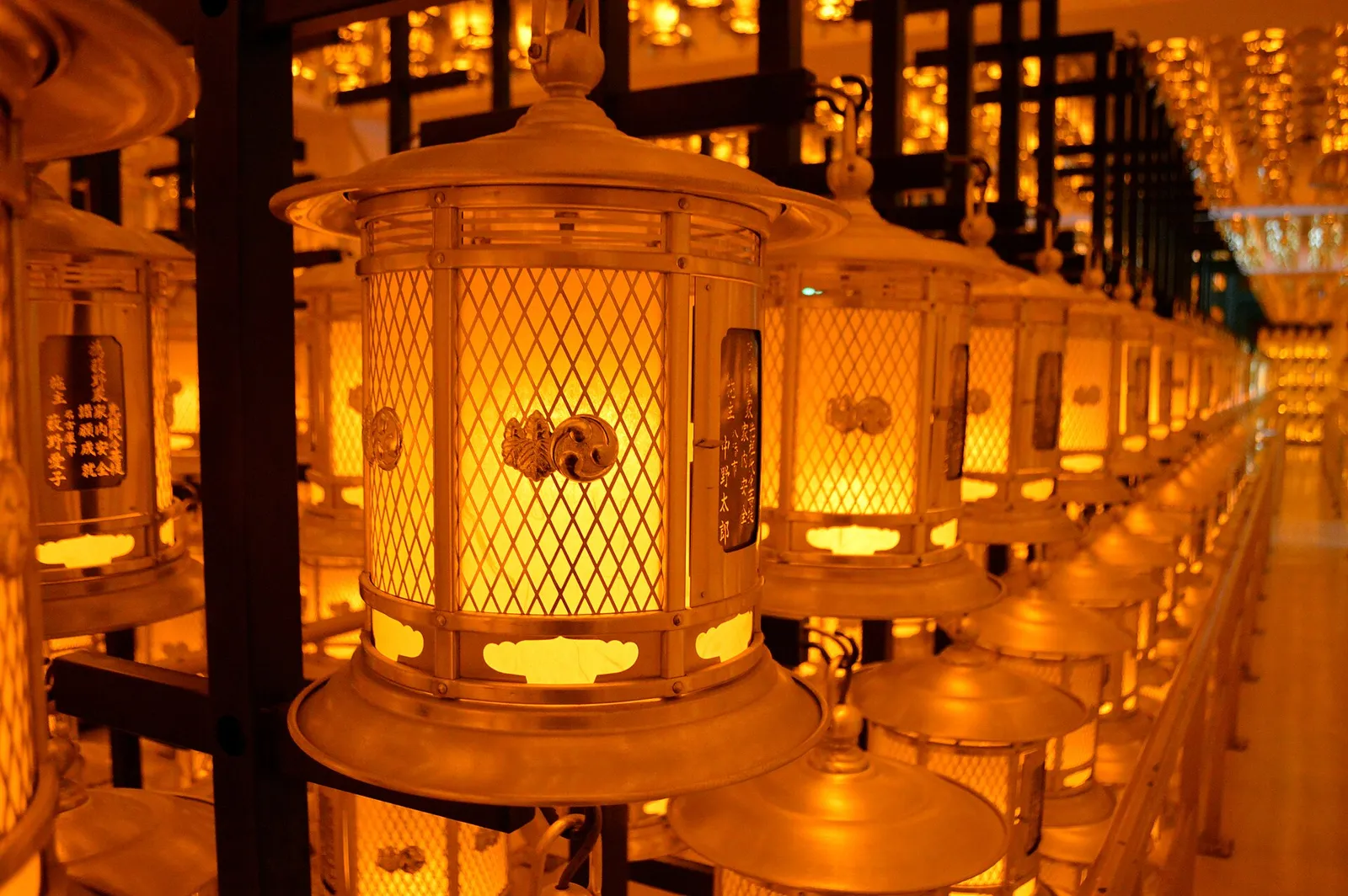
Kansai is where Japanese Buddhism left its loudest signatures, and this trail links them in one clean week: Kyoto for four days of both temple belts at the only sane pace (dawn), then up and over to Koyasan — the mountaintop monastery town where you sleep in a temple, eat shojin ryori vegetarian cuisine, and wake to incense and fire rituals — down to Nara’s Great Buddha and shrine deer, and out through Osaka’s neon appetite. Fly into Kansai Airport and out the same way; everything on this route is a short train ride apart. Temple manners, from offering bows to photography etiquette, are in our etiquette guide.
Day 1: Arrive in Kyoto
The Haruka limited express runs Kansai Airport to Kyoto in about 80-90 minutes (¥3,060, as of October 2026) — reserve a seat and land in the old capital by mid-afternoon. Check in, then walk: the Kamo river at dusk, the lantern-lit lanes of Gion, and an early dinner of obanzai home-style Kyoto cooking before the jet lag wins.
Practical tip: Buy your IC card (ICOCA, or Suica in your phone wallet) at the airport and reserve Koyasan lodging tonight if you have not — shukubo temple lodgings are this route’s scarcest bed. Aim a first dinner for 6 p.m.; Kyoto’s kitchens close early.
Day 2: Kyoto East
The dawn strategy: Fushimi Inari at 7 a.m., when the thousands of vermilion torii belong to a handful of walkers, back down by 9:30. Then the eastern temples — Sanjusangendo’s 1,001 gilded statues or Tofukuji’s Zen gardens — and the Higashiyama slope walk from Kiyomizu-dera’s wooden stage down through Sannenzaka’s preserved lanes, landing in Gion at lantern hour.
Practical tip: No ticket exists for Fushimi Inari — the alarm is the reservation. Ride the Keihan line direct from Gion; buses lose an hour to morning traffic.
Day 3: Kyoto West
Arashiyama before nine: the bamboo grove while it is still audible, Tenryuji’s borrowed-landscape garden, and the Togetsukyo river bridge. After lunch, cross town to the Golden Pavilion of Kinkaku-ji (¥500) and the fifteen stones of Ryoan-ji’s rock garden next door — the day ends with you sitting on a wooden veranda, doing nothing, expertly.
Practical tip: The Randen tram is the scenic approach to Arashiyama and a small attraction itself; the grove is a 10-minute walk from the terminal and packed by ten, so let the timetable set your alarm.
Day 4: Kyoto North — the Philosopher’s Pace
The quiet belt above the city: Ginkaku-ji, the Silver Pavilion, then the canal-side Philosopher’s Path south through cherry maples to Nanzenji’s brick aqueduct and mountain-scaled gates. Afternoon is your flex — a tea ceremony experience, Nishiki Market’s last stalls, or simply the riverbank. Pack a small overnight bag tonight.
Practical tip: Forward your main luggage to your Osaka hotel by takkyubin tonight (front desks arrange it; next-day) and ride to Koyasan with a daypack — the temple stairs and mountain buses punish wheeled suitcases.
Day 5: Up to Koyasan, Shukubo Night
The classic ascent: rapid train to Osaka (¥580, 29 minutes), walk across Namba to Nankai, and ride the express up the valley (¥930) or the reserved limited express, then the cliff-climbing cablecar (¥500) and the bus into town (¥460) — about 3 hours door to door. Check into your shukubo, then walk Okunoin cemetery at dusk, two kilometers of moss, cedar and 200,000 graves leading to Kobo Daishi’s mausoleum, before a shojin ryori dinner of season-driven Buddhist vegetarian courses.
Practical tip: Nankai’s Koyasan World Heritage Ticket (from ¥3,980 round trip) bundles train, cablecar and mountain buses, as of October 2026. Gates and dinner hours at temples are fixed — arrive by check-in time or call ahead; the morning service starts before 6:30.
Day 6: Morning Fire, Then Nara and Osaka
Wake to the services: sutra chanting, then the goma fire ritual, flames and drumming in a lantern hall. Walk Danjo Garan’s great pagoda after breakfast, and catch a late-morning train down — Nankai to Namba, Kintetsu onward to Nara, about three hours total. The Great Buddha of Todai-ji (¥800) by mid-afternoon, deer bows in the park, the lantern approach to Kasuga Taisha; then the 40-minute Kintetsu run into Osaka and Dotonbori’s neon for dinner.
Practical tip: Todai-ji’s Daibutsuden stops admitting visitors before its 5:30 p.m. close — stand under the Buddha by 4. Feed the deer only official crackers (about ¥200), and show empty hands when you stop.
Day 7: Osaka Morning, Fly Out of KIX
Osaka in one honest morning: Osaka Castle’s keep and moat-side park (buy the e-ticket ahead to skip the queue) or a grazing lap of Kuromon Market, then the airport run. The Haruka covers Osaka Station to Kansai Airport in about 45 minutes (¥2,910); from Namba, the Nankai Rapi:t limited express does it in 35-40 minutes (¥1,520), as of October 2026.
Practical tip: Choose the airport line by where you slept — Haruka from the north (Umeda), Rapi:t from the south (Namba) — and leave 2.5 hours before an international departure; KIX immigration is thorough, not fast.
Practical Notes
Intercity and local transport
| Leg | Mode | Time | One-way cost (approx.) |
|---|---|---|---|
| Kansai Airport → Kyoto | Haruka limited express | 80-90 min | ¥3,060 |
| Kyoto → Osaka | JR special rapid | 29 min | ¥580 |
| Osaka-Namba → Gokurakubashi | Nankai express (or ltd exp) | ~100 min | ¥930 (ltd exp ¥1,880) |
| Gokurakubashi → Koyasan | Cablecar + bus | 5 + 10 min | ¥500 + ¥460 |
| Koyasan → Nara | Nankai + Kintetsu via Namba | ~3 h | ~¥2,600 |
| Nara → Osaka-Namba | Kintetsu | ~40 min | ~¥680 |
| Kyoto → Nara (alternative) | JR Miyakoji rapid | 45 min | ¥720 |
| Osaka → Kansai Airport | Haruka / Nankai Rapi:t | 45 / 35-40 min | ¥2,910 / ¥1,520 |
Fares as of October 2026. On the mountain, the Koyasan World Heritage Ticket (from ¥3,980) bundles the Nankai round trip, cablecar and buses; a local bus day pass is ¥1,500. The JR Pass covers none of the Koyasan or Kintetsu legs.
Budget estimate (per person, excluding international flights, 7 days)
- Backpacker: US$950-1,400 — guesthouses, temple night in a shared-bath shukubo, market meals
- Mid-range: US$1,500-2,400 — 3-4-star hotels, a mid-band shukubo with two meals, one kaiseki dinner in Kyoto
- Comfort: US$2,500-3,800 — machiya-style stays, an upper-band shukubo with private bath garden, Gion dinners
The shukubo night (¥10,000-40,000 per person with dinner and breakfast, most clustering in the lower-middle of that band, as of October 2026) is the budget’s one big swing — book the band you want, not the one you find.
Local transport verdict
Skip every pass. This route’s total rail spending — airport trains, the Koyasan chain, Nara legs, one rapid — sums to roughly ¥12,000-14,000 against a ¥50,000 seven-day JR Pass; there is no shape of this week that closes that gap. Between the JR and Kintetsu for Nara: from Kyoto, the JR rapid (45 minutes, ¥720) is the simple answer; from Osaka, Kintetsu runs direct into Namba and its station sits nearer the park. Inside Kyoto and Osaka, buses and subways run ¥230-390 a ride — an IC card (ICOCA, or Suica/Apple Wallet) beats every day pass unless you genuinely ride four-plus times a day. The single bundled ticket worth buying is Nankai’s Koyasan World Heritage Ticket. The full pass logic lives in the JR Pass guide, and your own legs price out in the JR Pass calculator.
Booking checklist
- Koyasan shukubo: 1-2 months ahead; confirm dinner time, gate closing and the morning service schedule; note vegetarian needs at booking (shojin ryori is vegan-leaning by default)
- Nankai limited express seats (Namba-Gokurakubashi) and the Haruka: a few days ahead; the Rapi:t from Namba is reserved-only
- Kyoto specialty experiences (tea ceremony, evening Gion walks, restaurant counters): 2-4 weeks ahead
- Osaka Castle e-ticket and any Universal Studios Japan day (the theme-park alternative): buy online before arrival
- Luggage forwarding Kyoto → Osaka hotel: arrange at the Kyoto front desk the evening before Koyasan
Sources & verification (8)
- https://www.japan-guide.com/e/e4904.html
- https://www.japan-guide.com/e/e4905.html
- https://www.japan-guide.com/e/e4107.html
- https://www.japan-guide.com/e/e2033.html
- https://www.japan-guide.com/e/e3915.html
- https://www.japan-guide.com/e/e2361.html
- https://transit.yahoo.co.jp/search/result?from=%E4%BA%AC%E9%83%BD&to=%E9%96%A2%E8%A5%BF%E7%A9%BA%E6%B8%AF&type=1&y=2026&m=10&d=9&hh=10&m1=30&m2=0&expkind=1&ws=2&s=0&al=0&shin=0&ex=1&hb=1&lb=1&sr=1&lf=0
- https://transit.yahoo.co.jp/search/result?from=%E4%BA%AC%E9%83%BD&to=%E5%A4%A7%E9%98%AA&type=1&y=2026&m=10&d=6&hh=09&m1=0&m2=0&expkind=1&ws=2&s=0&al=1&shin=0&ex=0&hb=1&lb=1&sr=1&lf=0