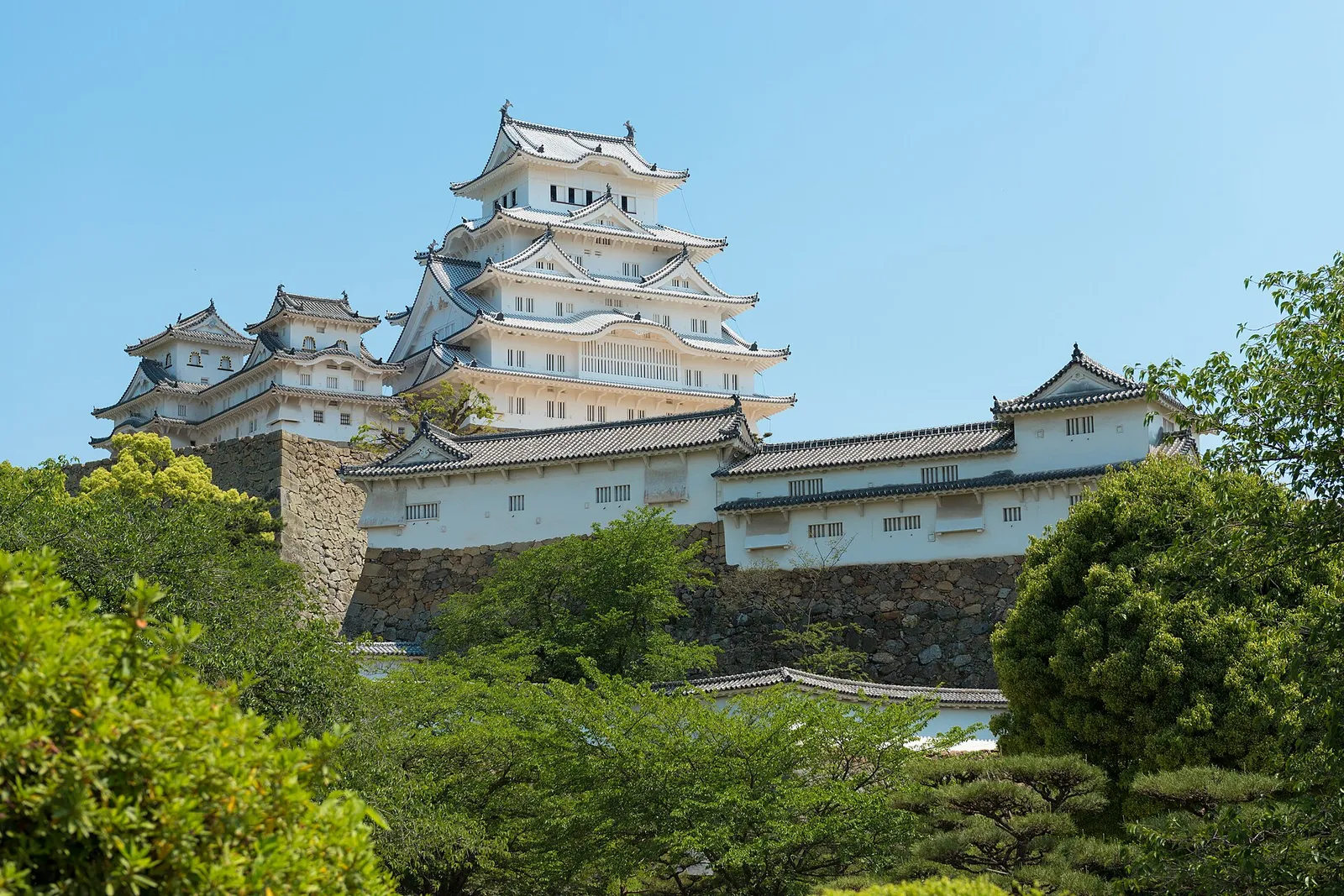
Himeji holds Japan's finest surviving castle: the White Heron, an intact early-1600s complex of over eighty wooden buildings that came through wars, fires, and the twentieth century unburned, and became a UNESCO World Heritage Site in 1993. Most visitors day-trip in from Osaka or Kyoto, climb the keep, and leave — missing Koko-en's nine Edo-style gardens next door, the thousand-year-old forest temple of Engyo-ji on Mount Shosha (where The Last Samurai was filmed), and Nada, Japan's most productive sake district, an easy train ride away. Himeji suits travelers on the Osaka-Hiroshima corridor who want the definitive Japanese castle experience, and rewards anyone who stays past four o'clock, when the day-trip crowds evaporate. One full day covers castle and garden; add a second for the mountain and breweries.
Top sights at a glance
No. 1
Himeji Castle
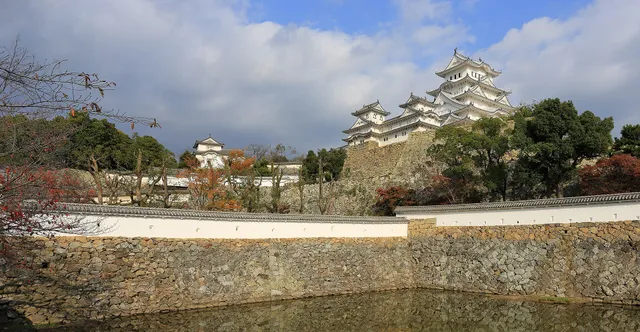
Japan's most complete feudal castle, a UNESCO World Heritage Site nicknamed the White Heron for its brilliant plastered walls. The complex of over eighty buildings was finished in 1609 and never burned, collapsed, or got rebuilt in concrete — one of only twelve original keeps left in the country. You enter through a deliberately maze-like chain of gates and walls designed to slow attackers, then climb steep staircases up the six-story keep, past armor displays, gun ports, and shrines, to a panoramic top floor. The west bailey's long corridor was once a princess's quarters.
Good to know · ¥2,500 adults, under-18s free; a combined ticket with Koko-en is ¥2,600, as of October 2026. Open 9:00-17:00 (to 18:00 June-August), closed December 29-30. Buy the e-ticket online to skip the counter line, arrive at 9 a.m. sharp, and expect waits for the keep in cherry season. Shoes come off inside; use the lockers for bulky bags.
No. 2
Kokoen Garden
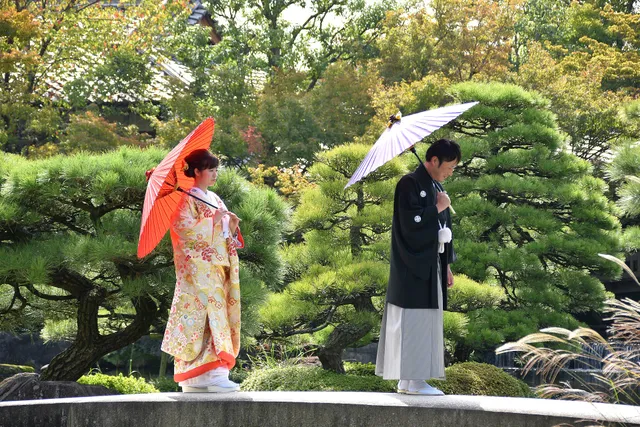
Nine small walled gardens laid out in 1992 on the site of the feudal lords' west residence, each in a different Edo-period style: a pond-and-waterfall lord's garden, a tea garden where you can sit with a bowl of matcha, pine, bamboo, and flower courtyards. Because the gardens are compartmentalized, they never feel as crowded as the castle, and the framing of walls, gates, and borrowed castle views is genuinely well done — photographers should come here in late afternoon light.
Good to know · ¥400 alone, or take the ¥2,600 combined castle ticket, as of October 2026; open 9:00-17:00 (entry till 16:30), closed December 29-30. It sits directly west of the castle's Otemon gate — do castle first, then decompress here over tea. Fifteen to forty-five minutes is enough.
No. 3
Engyo-ji on Mount Shosha
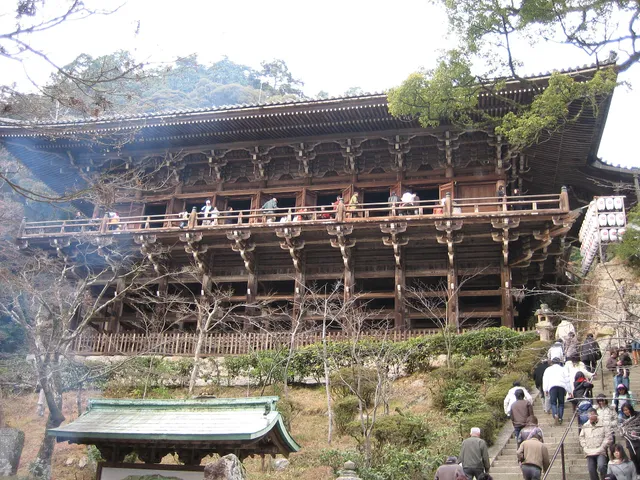
A Tendai-sect temple complex founded over a thousand years ago on a forested plateau above Himeji — a smaller, quieter cousin of Kyoto's Mount Kurama or Koyasan. Scenes from The Last Samurai were shot around its three great wooden halls, the Mitsunodo. The visit is a walk: from the ropeway station up through cedar forest to the Niomon gate, then to the Maniden, a beautiful hall built on stilts against the steep slope, with views over the city. Allow half a day door to door.
Good to know · Temple entry ¥800, ropeway ¥700 one way or ¥1,200 round trip, bus ¥320 each way from Himeji Station; a bus-and-ropeway combo costs ¥1,700, as of October 2026. Take bus #10 from the station's north exit (about 30 minutes) and check ropeway maintenance closures in winter. The 45-60 minute hike up instead of the ropeway is lovely in cool weather.
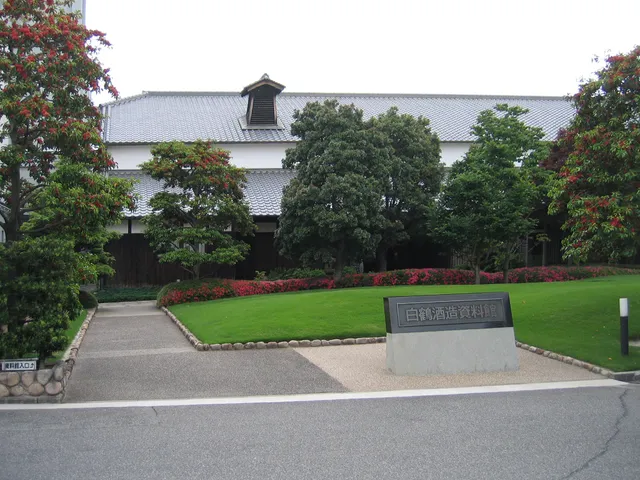
No. 4
The Nada Sake District
A roughly three-kilometer strip between Kobe and Nishinomiya that has been Japan's most productive sake region since the Edo period, thanks to quality rice, mineral-rich well water, cold winter brewing winds, and a port next door. Several historic breweries run free museums with tastings — Hakutsuru's is the best set-up for foreign visitors, with English signage, life-sized dioramas of the old brewery, and a tasting counter. It makes an easy half-day pairing with Himeji or Kobe.
Good to know · Museums are free; most open roughly 9:30-16:30 and close for Obon and New Year — Hakutsuru is closed those periods, Sawanotsuru closes Wednesdays, as of October 2026. Get off at Hanshin Sumiyoshi (five minutes' walk to Hakutsuru) or JR Sumiyoshi (15-20 minutes' walk). If you plan to buy bottles, bring a shipper or a suitcase; for a single tasting, 「すみません、試飲はできますか」gets you poured.
See it in motion
Some places earn a moving picture
Stills can't show how this place moves — the drift, the light show, the crowd flow. We picked a recent, high-quality walkthrough rather than a promotional cut.
Japan - Inside Himeji Castle Walking Tour [4K/HDR/Binaural]
Video Street View Japan · YouTube · plays on click
Embedded via YouTube's official player (privacy-enhanced mode). Video: Japan - Inside Himeji Castle Walking Tour [4K/HDR/Binaural] by Video Street View Japan. Not affiliated with Japan Travel Navi; screened for quality and accuracy on 2026-10-06.
Some places earn a stop; Himeji earns a detour. The castle appears from the shinkansen window like a white multi-roofed mountain, and up close it is the real thing: plaster, tile, and old timber, not the concrete reconstructions you get in Osaka or Nagoya. The city around it — about half a million people, an hour from Osaka — is a relaxed, walkable castle town that most tourists see only between 10 a.m. and 3 p.m. Stay longer and the ratios flip: you can have a thousand-year-old mountaintop temple almost to yourself in the morning, the castle at dusk, and a sake brewery district on the way out. This is the stop that makes the Osaka-to-Hiroshima run more than a blur of rails.
A Bit of History
Fortifications have stood on this hill since the 1400s, but Himeji Castle as you see it is the work of Ikeda Terumasa, son-in-law of the shogun Tokugawa Ieyasu, who rebuilt and massively expanded the complex between 1601 and 1609 — over eighty buildings spread across concentric moats, baileys, and winding lanes, all watched over by a six-story main keep with two attached wing towers, an arrangement almost nowhere else preserved.
Its survival is the remarkable part. Castles were liabilities for most of the next four centuries: feudal Japan dismantled them, fires consumed them, and WWII incendiary bombing burned nearly every wooden one. On July 3, 1945, American raids destroyed much of Himeji city — and missed the castle, a stroke of luck people here still talk about. Even the 1995 Great Hanshin Earthquake, which devastated nearby Kobe, left it standing. The result is one of Japan’s twelve original keeps and, since 1993, a UNESCO World Heritage Site. A meticulous eight-year restoration stripping decades of grime and re-plastering the walls finished in 2015, returning the castle to a whiteness that earned its nickname, Shirasagi-jo — the White Heron.
The town grew as a castle town should, straight down the grand Otemae-dori avenue from the station to the castle gates. Beyond the castle, Himeji’s story is largely the Harima plain’s: rice, timber, the Seto Inland Sea’s fish, and the breweries of Nada to the east, which grew rich on the same water and winds. Modern Himeji is a mid-sized regional city with a university, aerospace factories on the coast, and a tourism economy organized almost entirely around one very good building.
Culture & Daily Life
Himeji runs on a day-tripper rhythm, and you can use that. The castle opens at 9:00 and the bulk of visitors arrive mid-morning from Osaka, Kyoto, and the cruise-style bus circuits, peaking at noon. Before 9:30 and after 4 p.m. the castle grounds feel like a local park; Otemae-dori’s wide, pine-lined avenue is pleasant precisely when the tour flags are gone. Note the local-pride detail: Himeji residents pay ¥1,000 to enter their castle while everyone else pays ¥2,500, as of October 2026 — one of Japan’s steeper resident discounts, and a fair indication of how the city feels about the place.
Inside the keep, the experience is more shrine-crawl than museum: you climb steep, narrow staircases in socks (shoes off, bag lockers at the entrance), floors shrinking as you rise, past gun ports and a small shrine at the top. The one-way route through gates and walls was designed to confuse invading soldiers; it still reliably confuses tourists, which is part of the charm. Two practical notes from the official rules: e-tickets bought online skip the ticket counter queue, and drones are banned anywhere near the castle — possession alone can draw a ¥100,000 fine, as of October 2026.
The castle town etiquette is ordinary Japan etiquette (see /guides/etiquette-manners/), with one local accent: cherry blossom season in early April, when roughly a thousand cherry trees, including the lawn of the free third bailey, turn the whole complex into a hanami picnic ground. It is also the one time of year the keep develops long queues and timed-entry tickets; if your dates are fixed for early April, book the e-ticket and arrive at opening.
Nature & Day Trips
Himeji itself is flat and urban, but it sits at the edge of real geography. Mount Shosha, the forested plateau directly north of the city, is the big draw — a temple mountain reached by bus and ropeway, covered in cedar and quieter than anything in Kyoto (see the Engyo-ji section below). West along the coast, the Harima plain flattens into rice fields and factory towns; north, the hills rise toward Takeda Castle’s famous ruins, the “castle in the sky” that floats on autumn and winter morning fog.
Day trips east are trivially easy. Kobe is 15-20 minutes by shinkansen — harbor, Kitano’s Western houses, and the Arima Onsen hot spring town up behind the mountain, all covered in our Kobe guide (/destinations/kobe/). Osaka is about 30 minutes by shinkansen or 70 by rapid train for a louder evening. If you are ending the day in Kobe or Osaka anyway, fold the Nada breweries in on the way — they sit between Himeji and Osaka, not far off the rail line (see /destinations/osaka/). Kansai Airport connects with a transfer at Shin-Osaka in about two hours.
Food & Drink
Himeji’s kitchen is the Seto Inland Sea’s. The signature local dish is anago-meshi: conger eel, glazed and grilled over rice, served in lacquer boxes at restaurants around the station and castle — a satisfying ¥1,500-2,500 lunch that doubles as train picnic fuel. Behind it come ordinary-good coastal things: seasonal sashimi sets, octopus and sea bream, oyster dishes in winter, and Hyogo beef from the Tajima bloodlines that also produce Kobe Beef — same animal genetics, friendlier price, since you are an hour from the brand’s home turf.
Two local habits worth copying. First, winter means oden, the soy-dashi hot pot of daikon, eggs, and fish cakes, at station stalls and convenience stores — Himeji’s version leans on local dashi. Second, this is sake country: Nada’s breweries are a short train ride away, and even in town you will see sake lees (sake-kasu) in soups and amazake, the sweet warm rice drink, in castle-town cafés in cold months.
Budget-wise Himeji is gentler than Kyoto or Osaka: ¥1,000-1,500 buys a solid noodle or donburi lunch, ¥3,000-5,000 a good dinner, and the station buildings hold bakery, udon, and bento floors for castle picnics. The department-store basement food halls around Himeji Station do a genuinely good ¥1,000-1,800 bento selection if you are catching an evening train — buy before you board, because the shinkansen only sells snack boxes.
Top Sights
Himeji Castle
Start with the obvious, because the obvious is magnificent. The approach matters: from Otemae-dori you cross the outer moat, pass through the Hishi and other gates, and feel the route narrow, zigzag, and climb — the labyrinth was engineered to break an attacker’s momentum, and 400 years later it still slows everyone down, this time pleasantly. The main keep is a six-story wooden structure with two connected wing towers, one of the very few keeps in Japan with this layout intact; inside, the staircases are steep ladder-like flights and the top floor holds a small shrine and a wraparound view over the city to the inland sea and, on clear days, Awaji Island.
Give the castle three hours: the free third bailey with its cherry lawn, the paid route through the west bailey’s long residential corridor — built for a princess, with defensive window slits disguised in the walls — and the keep itself. The ¥2,500 adult admission (under-18s free) or ¥2,600 combined ticket with Koko-en is steep by Japanese standards but honest; the e-ticket option skips the counter queue, and in cherry season and summer holidays the keep switches to numbered tickets when lines get long. Photography is fine everywhere except a few interior display rooms; the classic shot is from the southwest moat, where the keep doubles itself in the water.
Kokoen Garden
Koko-en is what a modern Japanese garden should be: nine discrete walled gardens built in 1992 on the archaeological site of the lords’ west residence, each a different Edo-period genre — the pond-and-waterfall stroll garden of a daimyo residence, a tea garden with a thatched teahouse where ¥500-700 buys matcha and a sweet (cash-friendly, no reservation), pine and bamboo courtyards, a flower garden, and a stream garden fed by the old moat channel. The compartmentalization is the trick: crowds that feel dense at the castle dissolve into separate rooms, and there is nearly always one garden with nobody in it.
Enter directly from the castle’s west exit — Otemon gate — making the natural circuit castle-then-garden, with the tea garden as your reward. ¥400 alone, as of October 2026, or use the combined ticket; open 9:00-17:00, closed December 29-30. The bridges and waterfalls photograph best in late afternoon; in early April the cherry combination (castle plus garden) is the best single day Himeji offers.
Engyo-ji on Mount Shosha
Thirty minutes from the castle by bus and ropeway, Engyo-ji is the answer to “I loved Himeji but it was crowded.” This Tendai temple complex, founded in the 960s, spreads across a quiet wooded plateau: cedar-lined paths, mossy stone steps, and a cluster of huge wooden halls — including the Mitsunodo trio (main hall, dining hall, and training hall) whose weathered timber appeared throughout The Last Samurai. The Maniden, a hall perched on pillars against the slope like Kiyomizu-dera’s stage, is the visual highlight, with a view over Himeji’s sprawl.
Logistics are the only friction: bus #10 from Himeji Station (¥320, about 30 minutes, every 20 or so) to the ropeway base, then the ropeway up (¥700 one way, ¥1,200 round trip); temple admission is another ¥800, as of October 2026 — or the ¥1,700 bus-plus-ropeway combo softens the arithmetic. A minibus shuttles between the upper ropeway station and the Maniden for ¥500 round trip if the 10-15 minute uphill walk does not appeal. Serious legs can hike the whole mountain in 45-60 minutes. The ropeway closes for maintenance in part of winter; check before you commit. Dress warmly — the plateau runs cooler than the city.
The Nada Sake District
Nada is not in Himeji proper — the brewery strip runs roughly three kilometers between Kobe and Nishinomiya, reached in well under an hour by rail from Himeji — but no sake region in Japan matters more, and it pairs naturally with a Himeji or Kobe day. The formula that made Nada Japan’s top producer since the Edo period is on display at its free brewery museums: Yamada-Nishiki rice from Hyogo, hard mineral well water called miyamizu, cold winter brewing winds off Rokko, and Osaka’s port next door for shipping.
Pick one or two museums, not all of them. Hakutsuru’s is the best first stop for foreign visitors — English signage and video, life-sized replicas of the old brewery, and a tasting counter; it is open 9:30-16:30, closed only around Obon and New Year. Sawanotsuru’s museum is the historic alternative (closed Wednesdays), and Hamafukutsuru pours its gold-medal ginjo in a modern building (closed Mondays). All are free, as of October 2026. Access: Hanshin Sumiyoshi Station, five minutes’ walk to Hakutsuru — or JR Sumiyoshi if you are riding a JR Pass, then 15-20 minutes on foot. Two hours suffices; tastings are small cups, but pace yourself anyway, and carry ID — you are drinking at work in a working brewery.
Getting There & Around
Himeji sits on the Sanyo Shinkansen: about 30 minutes from Shin-Osaka, 50 from Kyoto, and around three hours from Tokyo at roughly ¥16,000 one way, as of October 2026. Japan Rail Pass holders can ride Hikari trains here for free but pay a supplement for Nozomi — the full math is at /guides/jr-pass-worth-it/. Budget alternatives: JR special rapid trains from Osaka run about 70 minutes, and Sanyo Railway through-services crawl to Osaka’s Umeda cheaply. From Kansai Airport, transfer at Shin-Osaka; allow about two hours.
The city itself yields to walking and one bus. The castle is a straight, obvious 15-20 minute walk down Otemae-dori from Himeji Station, or a ¥210 bus; the same IC card you used in Tokyo or Osaka works on Himeji’s buses (see /guides/trains-and-ic-cards/). For Mount Shosha take bus #10 from the station’s north exit. Taxis from the station to the castle run ¥800-1,000. You will not need a car for anything on this page.
Where to Stay
Honestly: most travelers should day-trip Himeji from Osaka or Kyoto and sleep there. But if you want the castle at dawn, the mountain at leisure, and Nada without a deadline, spend one night. The practical base is directly around Himeji Station — the newest business hotels, the food floors, and every bus and train you need; it is a 15-minute commute to the pretty parts. For atmosphere, a thin band of small hotels and ryokan along Otemae-dori and east of the castle puts you inside the castle town’s morning quiet, and a handful of rooms actually face the keep — worth requesting if the price is similar. Avoid positioning near the coast unless you have a specific reason; the charm is all castle-north.